
The Festive Season Is Approaching. Is Your Business Ready?
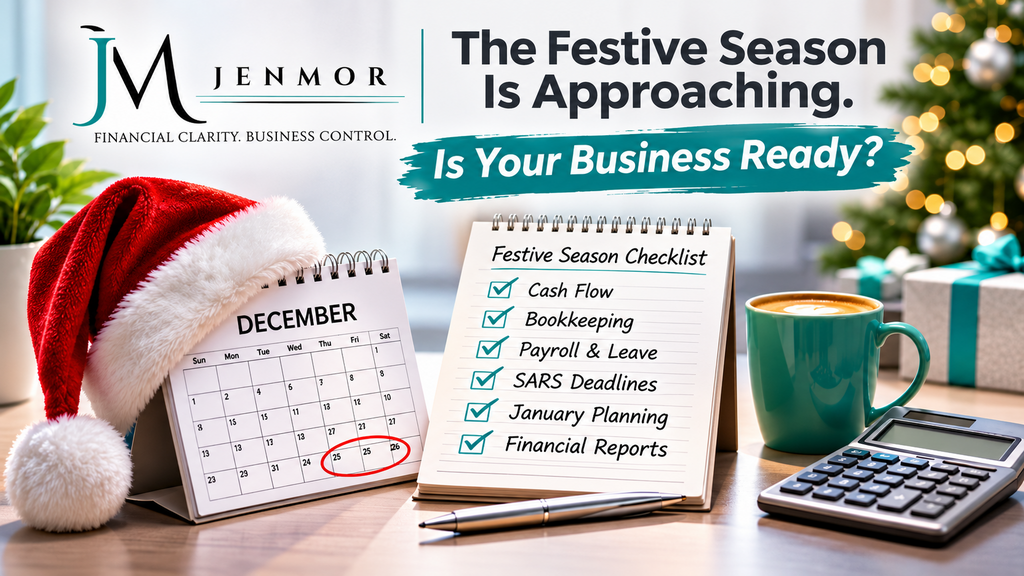
The Festive Season Is Approaching. Is Your Business Ready?
The festive season can bring strong sales, slower payments, payroll pressure, leave, supplier obligations and deadlines — often at the same time. A little planning before December can make the difference between simply getting through year-end and entering January financially prepared.
For South African small and medium-sized businesses, November is the ideal time to review financial records, identify outstanding obligations and prepare for the weeks ahead.
1. Review Your Cash Flow
The festive season can place additional pressure on business cash flow.
Before December arrives, consider:
- Which customers still owe you money?
- Are sufficient funds available for salaries and other payroll obligations?
- Have you budgeted for supplier payments and operating expenses?
- Will your business have enough working capital to cover January expenses?
Remember: A profitable business can still experience cash flow difficulties if money is not collected on time.
2. Get Your Bookkeeping Up to Date
Accurate bookkeeping provides a clear picture of your business's financial position.
Make sure that:
- Bank transactions are captured and reconciled.
- Customer invoices are issued and recorded.
- Supplier invoices and expenses are up to date.
- Outstanding debtors and creditors are reviewed.
- Financial reports reflect your current business position.
Leaving bookkeeping until January can create unnecessary pressure when the new year begins.
3. Prepare for Payroll and Employee Leave
December often brings additional payroll responsibilities.
Review your arrangements for:
- Employee salaries and payment dates.
- Annual leave and leave balances.
- Bonuses or additional payments, where applicable.
- PAYE, UIF and SDL obligations.
- Payroll processing during business closures.
Planning ahead helps ensure employees are paid correctly and statutory obligations are managed.
4. Stay on Top of SARS Deadlines
The festive season does not mean that tax and compliance responsibilities disappear. Businesses should review their applicable SARS obligations, including VAT, PAYE and other required submissions. Check the relevant deadlines in advance, particularly if your business will close during December.
Late submissions or payments may result in unnecessary penalties and interest.
5. Plan for January Before December Arrives
January can be financially challenging for businesses that have not prepared adequately.
Customers may take longer to settle outstanding accounts, while salaries, rent, suppliers and other expenses continue. Consider preparing a simple January cash flow forecast that includes expected income, committed expenses and available cash reserves.
This will help you identify potential shortfalls before they become problems.
6. Use Your Financial Reports to Make Better Decisions
Your financial information should do more than record what happened.
It should help you understand:
- Whether your business is profitable.
- Where expenses are increasing.
- Which customers have outstanding balances.
- Whether cash flow is sufficient.
- What improvements can be made in the new year.
Reliable financial information allows business owners to make informed decisions with greater